

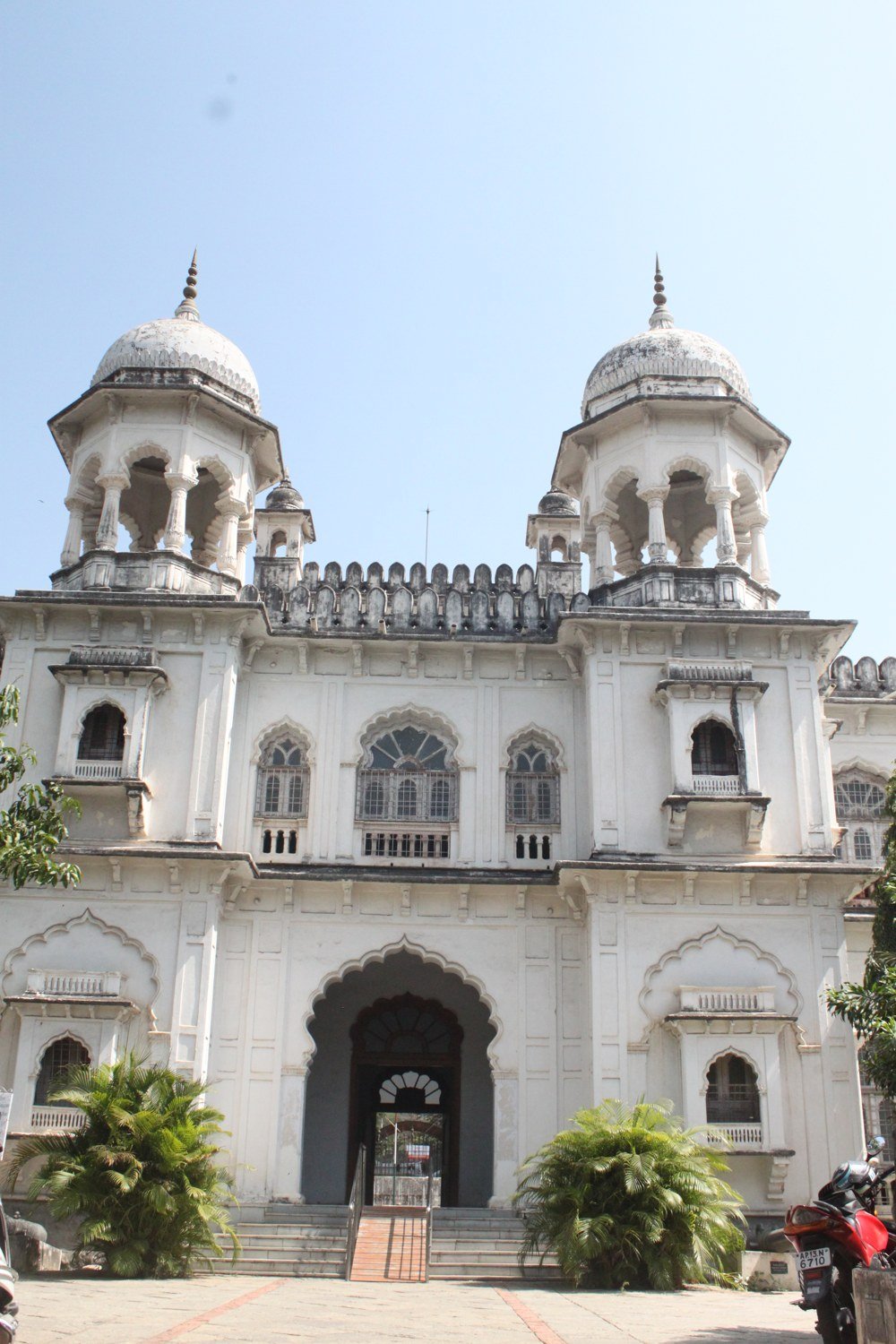
From the Hyderabad archive | Original event date: 1931
The Hyderabad Museum was formally inaugurated in 1931 in Public Gardens, Nampally. Now known as the State Museum, it brought archaeological finds from across the former Hyderabad State together with art and antiquities from the collection of Mir Osman Ali Khan, the seventh Nizam.
How did the collection come together?
The museum grew out of efforts to collect and preserve objects recovered at archaeological sites. Its institutional history traces the work back to nineteenth-century excavations associated with Henry Cousens. In the 1920s, finds were placed in the building developed under Mir Osman Ali Khan, who also contributed objects from his collection. The inauguration in 1931 brought those collections together for display.
Why do records give two periods for the same museum?
Heritage Telangana and MIT’s architectural archive distinguish the construction of the building in the 1920s from its inauguration in 1931. The façade still gives the building its own character within Public Gardens. A high central arch marks the entrance, framed by two domed towers.
What does the museum preserve today?
The Department of Heritage lists Buddhist and Jain sculpture alongside bronzes, copies of Ajanta paintings and an Egyptian mummy. These collections have different origins. The outdoor sculpture garden preserves stone architectural pieces and memorial stones, while the galleries bring together material collected through archaeology and through donations.
The museum predates the move of the Salar Jung Museum to Darulshifa by several decades. For visitors tracing how Hyderabad built its public collections, the Nampally museum preserves the history of the former state’s archaeological work in the same building where much of that material was assembled.
Archive photograph of the State Museum in Public Gardens, taken on 8 February 2019. Photo by Adbh266 via Wikimedia Commons, CC BY-SA 3.0. Resized for the web.

A city worth understanding.
Continue exploring the news ↗