

From the Hyderabad archive · Original event date: 1591
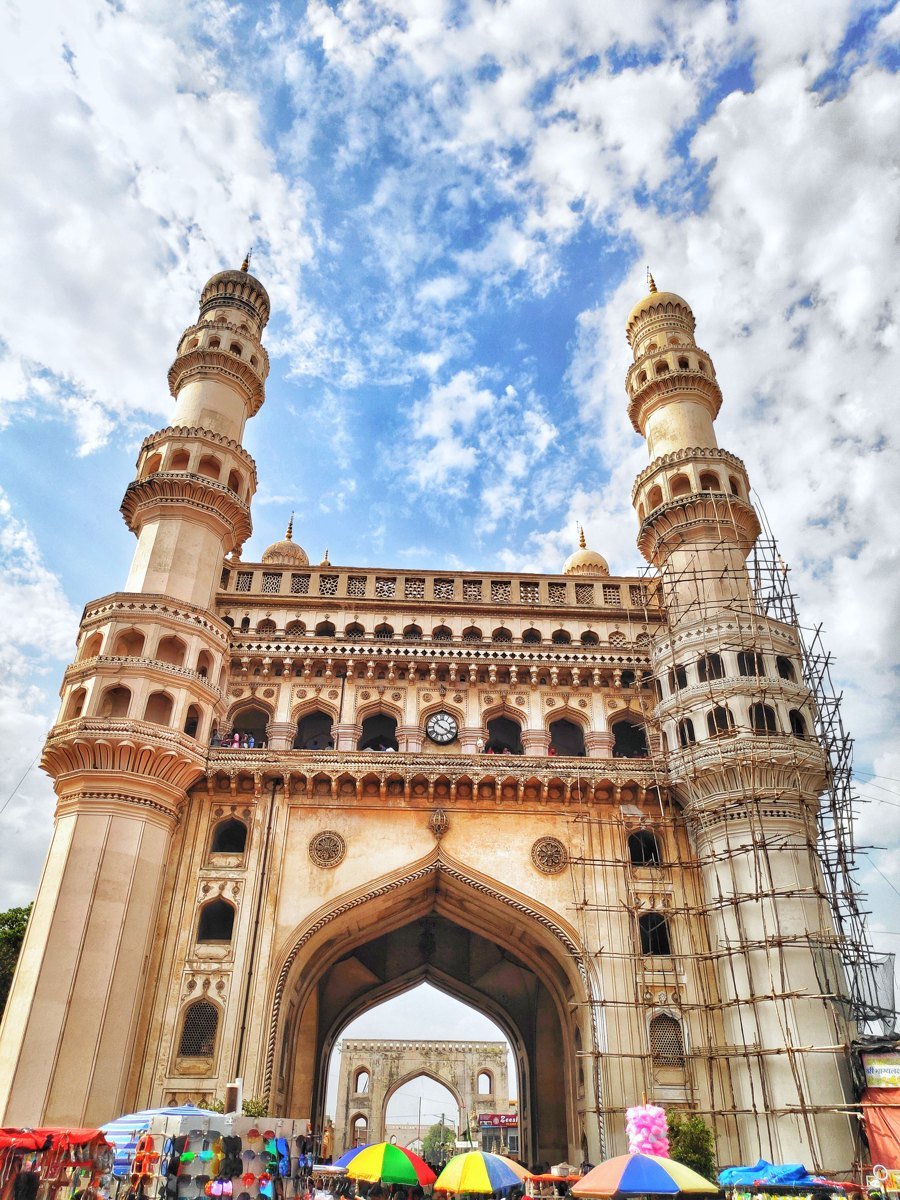
Muhammad Quli Qutb Shah built Charminar in 1591, the year associated with the founding of Hyderabad. Its four tall arches open towards the surrounding streets, while a minaret rises from each corner. The design makes the monument a marker for the city’s original centre as well as a building in its own right.
Archive photograph of Charminar in September 2024. © Craftofolio.media / Wikimedia Commons / CC BY-SA 4.0. Resized for the web.

What the four arches tell you about the old city
Charminar stands where four routes meet. The arches give a view along those approaches and explain why it helps to look at the building from street level before studying its upper storeys. Nearby Laad Bazaar, known for bangles, and the Mecca Masjid precinct give visitors two different ways to approach the landmark through the Old City.
Which elements date to later generations?
The Hyderabad district history records that the four clocks were added in 1889. That puts the clock faces nearly three centuries after the monument’s construction. As you look above the main arch, the clock and the tiers of small openings show how later additions can become part of a familiar skyline.
Why was Charminar built?
The district administration dates the building to 1591 but presents several accounts of why it was commissioned. A widespread tradition connects it to the end of a plague. Telangana Tourism also links it to the city’s founding. The founding date and the traditional accounts answer different questions: when the monument took shape and how later generations explained it.
A city worth understanding.
Continue exploring the news ↗